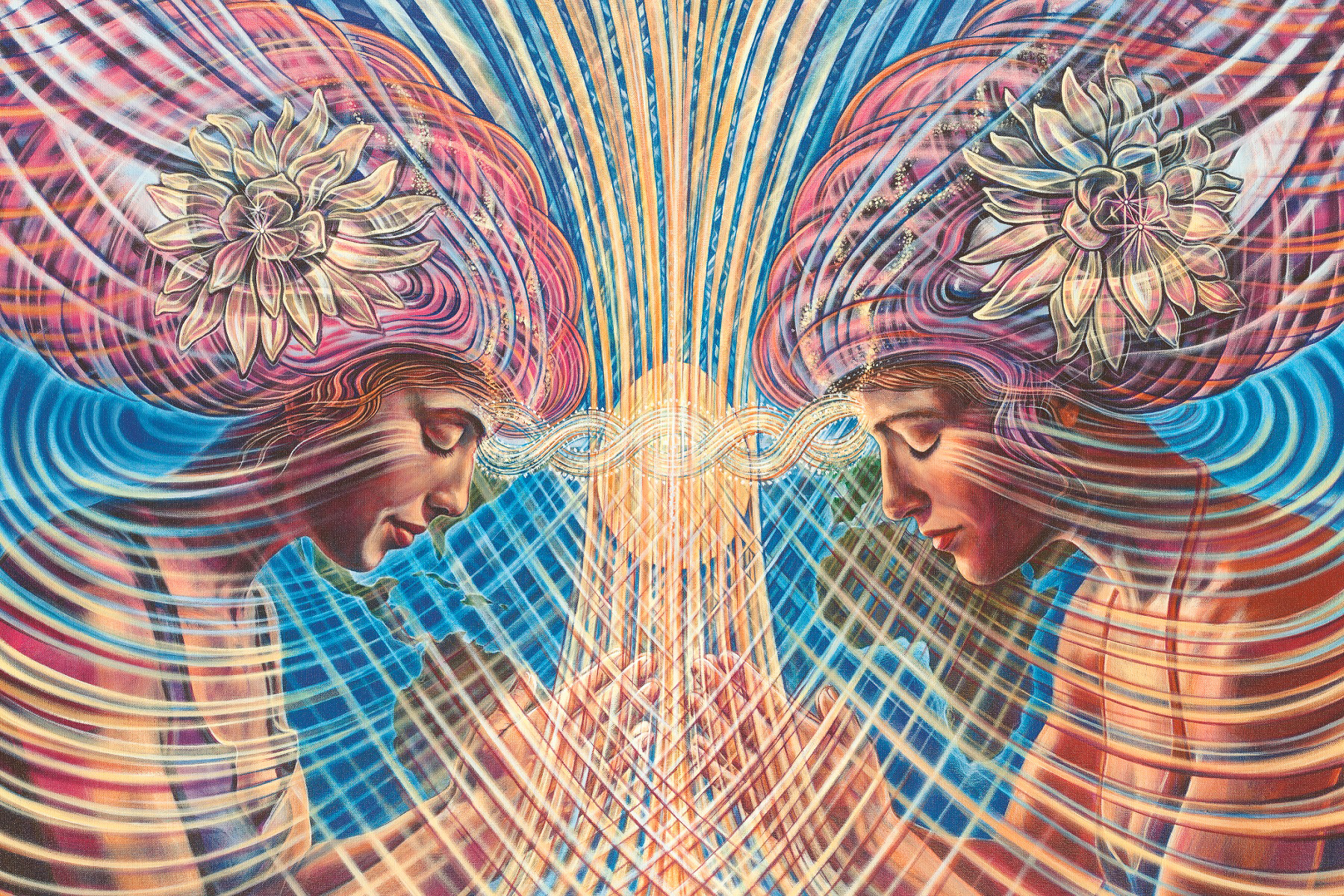
1. What is Light and Sound Meditation?
Answer
Light and Sound Meditation is an approach to meditation in which attention gradually moves beyond ordinary thought towards deeper states of consciousness, where inner Light and inner Sound may become directly experienced.
The Light is not simply a visualisation and the Sound is not ordinary physical sound entering through the ears. They are described as inner phenomena that can arise spontaneously as meditation deepens.
At first, meditation may involve little more than becoming quieter and less absorbed in thought. With continued practice, however, awareness may begin to move beyond the familiar activity of the mind.
The importance of Light and Sound Meditation is therefore not merely the phenomena themselves. They can act as gateways towards increasingly profound states of consciousness and a deeper understanding of what we are.
2. What is the inner Light experienced in meditation?
Answer
The inner Light can appear in many different forms. Some people initially experience points of light, colours, flashes or luminous patterns, while deeper experiences may involve extraordinary fields or expanses of brilliance.
These experiences normally occur with the eyes closed and are distinguished from deliberately imagining or visualising a light.
What makes the phenomenon particularly interesting is that it has been reported within many contemplative and mystical traditions throughout history.
Within Light and Sound Meditation, the inner Light is regarded not merely as an interesting visual effect, but as one indication that consciousness is beginning to move beyond its ordinary dependence upon physical sensory experience.
3. What is the inner Sound experienced in meditation?
Answer
The inner Sound is an auditory-like experience that appears to arise within consciousness rather than through the physical ears.
It may initially be subtle and can take many forms. Meditators have described tones, humming, ringing, rushing sounds, harmonics and extraordinarily complex or beautiful inner resonances.
The Sound should not be confused automatically with ordinary environmental noise or physical conditions such as tinnitus. Careful observation is important when distinguishing between them.
As meditation deepens, the Sound may become increasingly powerful and absorbing. Within Light and Sound Meditation it can become a means through which attention is drawn away from ordinary thought and into deeper levels of consciousness.
4. Are the inner Light and Sound simply created by the imagination?
Answer
Imagination can certainly produce mental pictures and remembered sounds, which is why discrimination is important in meditation.
The inner Light and Sound described by experienced meditators are generally reported as arising spontaneously rather than through deliberate visualisation or imagination.
They may also possess an intensity, clarity and independence that makes them feel quite different from ordinary mental imagery. At deeper levels, they can appear far more vivid than anything a person could intentionally construct.
The ultimate interpretation of these experiences remains open to investigation. What matters in meditation is not forcing them to appear, but allowing experience to unfold naturally and observing carefully what actually occurs.
5. Why do some people experience Light or Sound sooner than others?
Answer
Meditation develops differently for different people. Some may notice inner Light or Sound relatively quickly, while others can meditate for considerable periods before experiencing either clearly.
This does not necessarily mean that one person is progressing more successfully than another. Individuals differ greatly in temperament, sensitivity, previous experience and the way consciousness responds during meditation.
Expecting a particular experience can itself become an obstacle. If someone sits continually asking whether the Light has appeared yet, the resulting mental activity may make deeper stillness more difficult.
For this reason, the most useful approach is normally to meditate without demanding results. Light and Sound are better allowed to emerge naturally rather than being pursued through effort or expectation.
6. What if I meditate but do not see Light or hear Sound?
Answer
Not experiencing obvious Light or Sound does not mean that meditation is failing. One of the first developments may simply be greater stillness, clarity or an increasing ability to observe thought without becoming completely absorbed in it.
Meditation is not a performance in which particular experiences have to occur according to a timetable.
Trying too hard to see Light or hear Sound can actually make the mind more active. A quieter attitude of attention and receptivity is usually more helpful.
The deeper purpose is the development and exploration of consciousness itself. Light and Sound may become important features of that journey, but meditation should not be reduced to waiting impatiently for particular phenomena to appear.
7. Why is stillness so important in Light and Sound Meditation?
Answer
Our ordinary consciousness is continually occupied by thoughts, memories, emotions, sensations and reactions to the world around us.
These activities are so persistent that subtler levels of experience can easily remain unnoticed. Meditation gradually reduces this mental noise.
Stillness does not necessarily mean forcibly stopping thought. It develops as we cease continually feeding and following every thought that arises.
As the surface activity of the mind becomes quieter, inner Light and Sound may become easier to recognise. More importantly, awareness itself can become clearer, allowing consciousness to move towards states that are normally obscured by continuous mental activity.
8. Do the Light and Sound change as meditation becomes deeper?
Answer
Yes. Reports from meditators suggest that both Light and Sound can change considerably as meditation develops.
What begins as a faint point of light or a subtle tone may become increasingly clear, complex and powerful. Colours may change, fields of luminosity may expand and the Sound may develop qualities unlike anything normally heard through the physical senses.
At deeper levels, the distinction between observing the Light or listening to the Sound can itself begin to change. The experience may become increasingly immersive, as though consciousness is entering rather than merely observing it.
For this reason, Light and Sound are not necessarily fixed phenomena. They may accompany a continuing movement of awareness through progressively deeper states of consciousness.
9. Can Light and Sound Meditation take consciousness beyond the body and mind?
Answer
One of the central possibilities explored through Light and Sound Meditation is that consciousness may be capable of experiencing states in which ordinary awareness of the physical body and thinking mind becomes greatly reduced.
As meditation deepens, attention can become less occupied by physical sensation and the continuous stream of thought through which we normally define ourselves.
There may then be experiences of profound stillness, expanded awareness, inner Light and Sound, and states in which the usual boundaries of the individual appear much less important.
From the perspective of deep meditation, this raises a profound question: if awareness can remain when our ordinary identification with body and mind has fallen away, then consciousness may be considerably more fundamental than either of them.
10. Where can Light and Sound Meditation ultimately lead?
Answer
Light and Sound Meditation can begin very simply, with learning to become quiet and observing the activity of the mind.
As meditation develops, inner Light and Sound may emerge and consciousness can begin to move beyond its ordinary identification with thought, personality and physical experience.
At greater depths there may be profound changes in the sense of self, increasingly expansive states of awareness and direct experiences that challenge our normal understanding of consciousness and reality.
The ultimate purpose is therefore not simply to see beautiful Light or hear extraordinary Sound. These are part of a much greater exploration whose deepest possibility is awakening and, ultimately, enlightenment: the discovery of what consciousness is when the limitations of ordinary identity have fallen away.