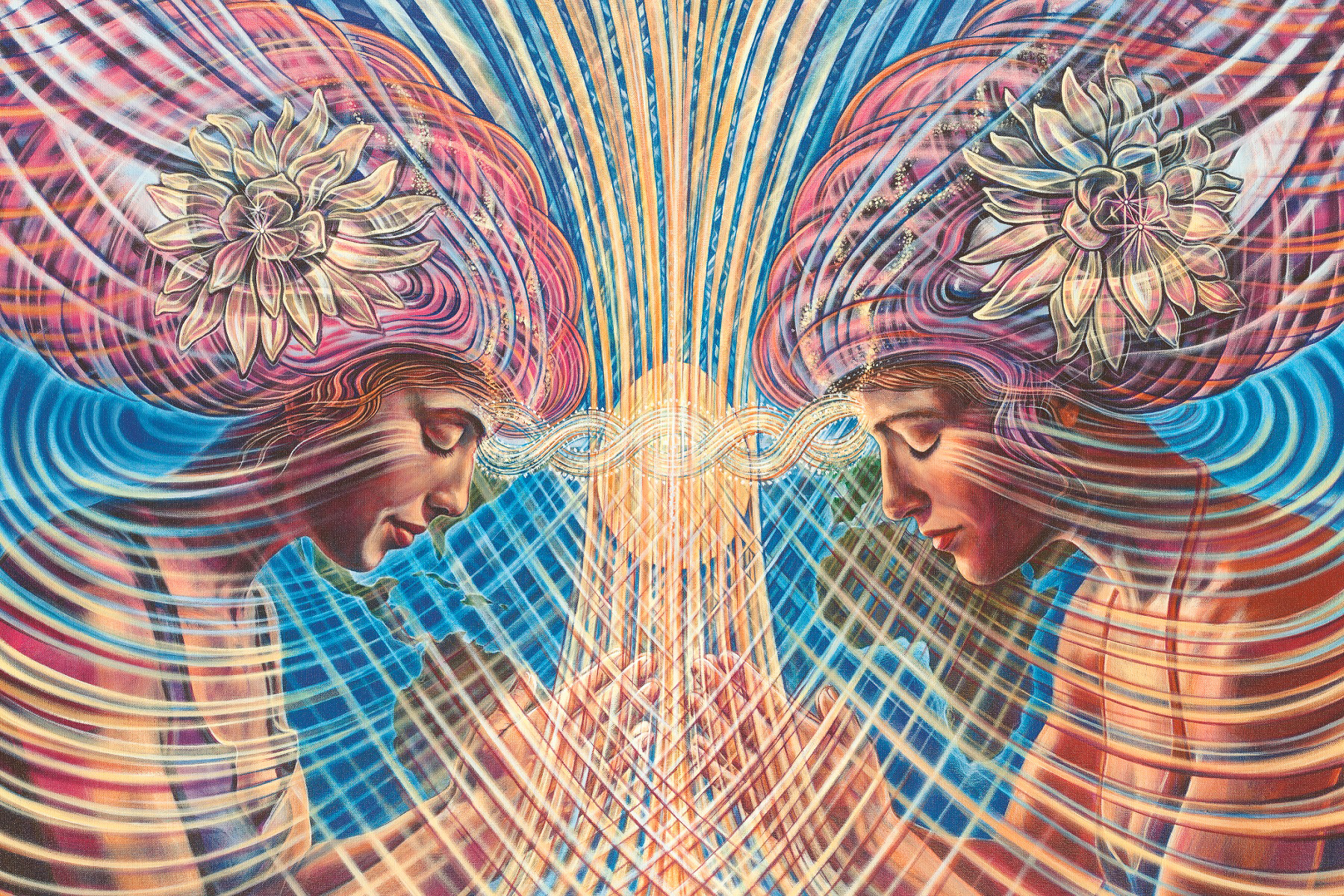
1. What is a spiritual guide?
Answer
A spiritual guide is generally understood to be a non-physical consciousness that assists, encourages or influences an individual during their physical life.
Different traditions have used many names for such beings, including guides, teachers, helpers, guardians and spiritual companions. The terminology varies, but the underlying idea is that human beings may not be entirely isolated in their spiritual development.
Guidance need not necessarily arrive as a clearly heard voice. It may be experienced through intuition, dreams, meditation, sudden insight or a powerful sense that a particular direction or decision is important.
Within our own spiritual work, guides are understood as part of a much wider structure of consciousness extending beyond the physical world.
2. Does everyone have a spiritual guide?
Answer
Many spiritual traditions suggest that guidance is available to everyone, although most people may remain largely unaware of it during ordinary life.
The relationship need not always involve one permanent guide. Different forms of assistance may become relevant at different stages of a person’s life and spiritual development.
Some people report a very distinct sense of a particular presence accompanying them, while others experience guidance much more subtly through intuition, coincidences, dreams or meditation.
The important point is not necessarily to identify or name a guide, but to become sufficiently quiet and perceptive to recognise genuine guidance when it occurs.
3. How can we tell genuine spiritual guidance from our own thoughts?
Answer
This is one of the most important questions in any investigation of spiritual guidance because the human mind is extremely capable of creating expectations, interpretations and imagined conversations.
Genuine guidance is often described as having a different quality from ordinary thought. It may arrive unexpectedly, with unusual clarity, simplicity or certainty, rather than emerging through a long chain of mental reasoning.
Even so, discernment is essential. Any apparent guidance should be considered carefully, particularly if it encourages fear, superiority, dependency or harmful behaviour.
Meditation can help because learning to observe the mind makes it easier to recognise our normal patterns of thought. The quieter and more familiar we become with our own mental activity, the easier it may be to notice when something genuinely unusual occurs.
4. What is meant by the Spiritual Hierarchy?
Answer
The term Spiritual Hierarchy refers to the idea that consciousness beyond the physical world possesses structure, organisation and different levels of development.
Rather than imagining the non-physical realm as an undifferentiated collection of spirits, this perspective suggests that highly developed beings may work together in ways that assist the evolution of consciousness.
Within many esoteric and spiritual traditions, such beings have been described as Masters, guides, teachers or members of a hierarchy. The particular names and descriptions vary considerably between traditions.
Within our own work, the Spiritual Hierarchy is understood as an organised intelligence concerned with the spiritual development of humanity and with making deeper levels of consciousness accessible to those who are ready to experience them.
5. Why would a Spiritual Hierarchy be interested in humanity?
Answer
If consciousness continues beyond individual physical lives, then humanity may form part of a much larger process of spiritual development.
From this perspective, more developed levels of consciousness might naturally assist those still experiencing the limitations and opportunities of physical existence.
This need not mean controlling human affairs or removing our freedom to make choices. Guidance may instead involve creating opportunities, making spiritual knowledge available and helping individuals discover deeper states of consciousness for themselves.
The relationship might therefore be compared with teaching. A good teacher does not live the student’s life for them, but provides knowledge, encouragement and opportunities that allow understanding to develop.
6. What is a spiritual transmission?
Answer
A spiritual transmission is understood as information, insight or influence originating from a level of consciousness beyond the ordinary thinking mind and communicated through an individual who is able to receive it.
Some transmissions take the form of words or messages. Others may be experienced much more directly as changes in consciousness, energy, understanding or awareness.
The concept appears in many spiritual traditions, although different cultures describe the process in different ways. What they have in common is the suggestion that spiritual knowledge does not always originate through ordinary intellectual reasoning.
Within our work, transmissions are treated as material to be considered carefully rather than accepted merely because of their claimed source. Their value ultimately lies in what they reveal and whether they contribute meaningfully to understanding and spiritual development.
7. How are spiritual transmissions received?
Answer
People who report receiving spiritual transmissions describe the process in different ways. For some, words or ideas appear very clearly in consciousness. For others, understanding seems to arrive as a complete impression that must afterwards be translated into language.
The process may occur during meditation, periods of unusual stillness or at apparently unexpected moments.
One difficulty is that any information entering human awareness may be influenced by the receiver’s language, expectations and existing understanding. For this reason, even genuine inspiration may acquire something of the character of the person through whom it passes.
This makes discernment important. A transmission should be examined for its consistency, quality and value rather than accepted automatically because someone believes it came from a higher source.
8. Why don’t spiritual guides simply reveal themselves to everyone?
Answer
If spiritual guides and higher levels of consciousness exist, it is reasonable to ask why their presence is not completely obvious.
One possibility is that physical life has value precisely because we experience a considerable degree of independence. If guidance were overwhelming and undeniable, many of our choices would cease to be genuinely our own.
Spiritual development may require discovery rather than compulsion. Hints, experiences and opportunities can point towards a deeper reality while still leaving the individual free to investigate, reject or ignore them.
Meditation may gradually alter this situation. As ordinary mental activity becomes quieter, experiences that were previously hidden by the constant noise of thought may become easier to recognise.
9. Can spiritual guidance influence events in our lives?
Answer
Many people report occasions when an unexpected meeting, intuition, coincidence or change of circumstances appears to have occurred at exactly the right moment.
It is difficult to know how such events should be interpreted. Coincidences naturally occur, and human beings are very good at noticing patterns after the event.
Nevertheless, some experiences seem sufficiently unusual that people feel there may be a deeper intelligence involved. Spiritual traditions have often suggested that guidance can operate partly through circumstances rather than through direct communication.
If this occurs, it may be subtle rather than controlling. An opportunity may appear, but the individual still has to recognise it and decide whether to act upon it. Guidance and personal freedom can therefore exist together.
10. What role might the Spiritual Hierarchy play in human evolution?
Answer
Human evolution is usually understood in biological terms, but spiritual traditions propose that there may also be an evolution of consciousness.
If that is true, the Spiritual Hierarchy could be understood as assisting this development by making deeper knowledge and experiences available as humanity becomes capable of receiving them.
This might include the appearance of spiritual teachers, new approaches to meditation, experiences of inner Light and Sound, transmissions of information and periods in which large numbers of people begin questioning conventional ideas about consciousness and reality.
From this perspective, humanity’s spiritual development is not something imposed from above. It is a cooperative process. Guidance may be available, but individuals must still investigate, experience and ultimately discover the deeper nature of consciousness for themselves.