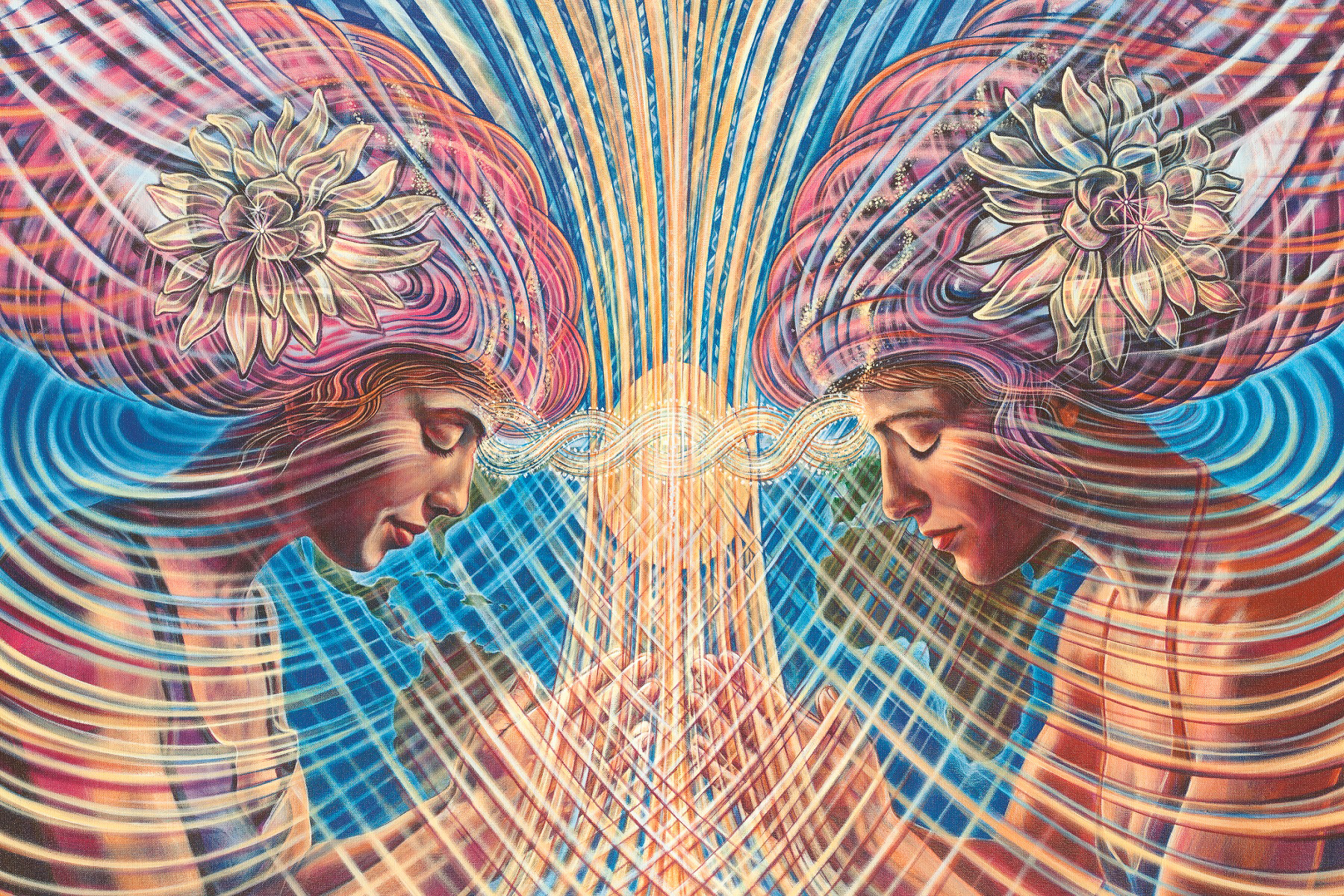
Spiritual awakening may be understood as an opening of awareness beyond the familiar boundaries of thought, personality and everyday perception. It may arise suddenly or unfold gradually, bringing experiences that are powerful and unmistakable or changes so gentle that their meaning becomes clear only with time. At its heart, awakening is the discovery that consciousness, life and our own deepest nature may be far greater than the ordinary mind has previously recognised.
Awakening does not follow a single pattern. Each person encounters it through their own sensitivity, circumstances, understanding and stage of inner development.
The experience itself may pass, deepen or return in different forms. What matters is not simply what is seen or felt, but how the opening begins to change awareness and the way life is understood.
What Awakening Means
Awakening is often described as becoming conscious of a deeper reality that has always been present but previously unnoticed.
Ordinary life is largely experienced through the mind, the senses and the individual personality. During an awakening, awareness may expand beyond these familiar limits. A person may recognise an inner stillness, presence or consciousness that seems more fundamental than thought.
There may be a sense that the usual identity is only one part of who we are. The person may feel connected with something universal, timeless or profoundly alive.
For some, this becomes a clear spiritual revelation. For others, it begins simply as a quiet recognition that life contains a depth and unity that cannot be explained by ordinary thinking alone.
How Awakening May Begin
Awakening may arise through meditation, contemplation, prayer, inner Light and Sound, a powerful experience of love, an encounter with nature, a near-death experience or another life-changing event.
It may also occur without any obvious preparation.
Some people have been seeking spiritual understanding for many years when the opening comes. Others have had little previous interest in spirituality and are surprised by what happens.
Difficult periods can sometimes loosen the structures through which a person has understood themselves and their life. Illness, bereavement, emotional upheaval or a sudden change in circumstances may lead someone to question what is permanent and what is truly important.
This does not mean that suffering is required for awakening. Joy, beauty, meditation and inner readiness may open the same door.

Experiences of Awakening
Awakening experiences vary enormously.
A person may see inner Light, colours, stars, radiant forms, cloud-like formations or intricate geometries. There may be movement through vast spaces or different levels of consciousness, sometimes accompanied by a sensation of great speed.
Others hear inner Sound. This may appear as a fine high note, music, bells, rushing water, vibration, humming or a powerful current of Sound that seems to draw awareness within.
There may also be warmth, energy, movement through the body, expanded awareness, profound stillness, unconditional love, intense bliss or an overwhelming feeling of freedom.
Some people temporarily lose the usual sense of separation between themselves and the world. The boundaries of the individual self may soften or disappear, leaving a direct experience of unity in which everything appears to arise within one consciousness.
Time may seem to stop. The body may feel distant or absent. There may be a sense of entering another dimension, returning to a spiritual home or remembering something that has always been known inwardly.
These experiences can be deeply meaningful, but no single experience defines awakening. One person may encounter brilliant Light and Sound, while another awakens through silence, insight, compassion or a gradual change in perception.
Quiet and Gradual Awakening
Not every awakening is dramatic.
A person may become more aware of the present moment, more sensitive to other people or increasingly conscious of the thoughts and emotions that previously controlled them.
There may be a growing need for silence, simplicity and truth. Former ambitions or interests may lose some of their importance, while meditation, compassion and the search for deeper understanding become more central.
The person may notice that they react less automatically. There may be a greater ability to observe thoughts without becoming completely absorbed in them.
These quieter changes can be as significant as visions or powerful spiritual states. Awakening is not measured by spectacle. A gentle but lasting transformation may ultimately be more valuable than an extraordinary experience that leaves everyday awareness unchanged.
Change and Integration
Awakening can bring peace, clarity and joy, but it may also be disorientating.
A person may struggle to explain what has happened or feel that friends and family cannot understand. Familiar beliefs may no longer seem adequate, while a new understanding has not yet become settled.
Powerful experiences may be followed by periods in which nothing unusual appears to happen. This can lead to disappointment or an attempt to recreate what was previously experienced.
It is generally more helpful to allow the experience to settle naturally. Meditation, ordinary routines, time in nature, gentle exercise, sufficient rest and contact with grounded people can all support integration.
The purpose is not to become detached from ordinary life, but to allow deeper awareness to become expressed through it.
Where unusual experiences are accompanied by prolonged confusion, severe distress, loss of sleep or difficulty functioning, appropriate medical or psychological support should also be sought. Spiritual understanding and professional care need not be in opposition.
The Guidance page explores how awakening may be understood, integrated and developed through meditation and continuing inner exploration.

Awakening and Enlightenment
Awakening and Enlightenment are closely related, but an awakening experience is not necessarily Enlightenment.
Awakening may reveal consciousness beyond the mind. It may provide a temporary experience of unity, inner Light, Sound, love, bliss or freedom from the ordinary self.
When the experience passes, however, familiar patterns of thought and identification may gradually return. The person has seen beyond the ordinary state, but the separate inner centre may still remain.
Enlightenment may be understood as a more complete and permanent transformation. It is not simply another vision or expanded state. A deeper view suggests that it is the ending of identification with the separate self and the direct realisation that consciousness is undivided — that All is One.
Awakening may therefore be the beginning of a profound journey rather than its completion. It opens the possibility of deeper meditation, continuing revelation and an eventual freedom that is no longer dependent upon temporary experiences.
In Essence
● Awakening is an opening beyond the ordinary boundaries of mind and identity.
● It may arise suddenly, gradually, spontaneously or through meditation and inner exploration.
● Experiences may include Light, Sound, energy, stillness, love, bliss, movement and unity.
● Quiet changes in awareness may be as significant as dramatic spiritual experiences.
● Awakening needs time, balance and integration within everyday life.
● An awakening experience may reveal a deeper reality, while Enlightenment represents a more complete transformation.
Awakening is deeply personal, yet it points towards something universal. The particular experience may differ from one person to another, but each opening invites the same essential exploration: to look beyond appearances, become still and discover more fully the consciousness from which life itself arises.
Click for the next page: Enlightenment
